2025 – 2026 · AI/ML · Platform Design
Search & Agentic AI Platform
Building the intelligence layer inside TurboTax: a platform that powers AI-driven search, personalized guidance, and agentic workflows across the product.

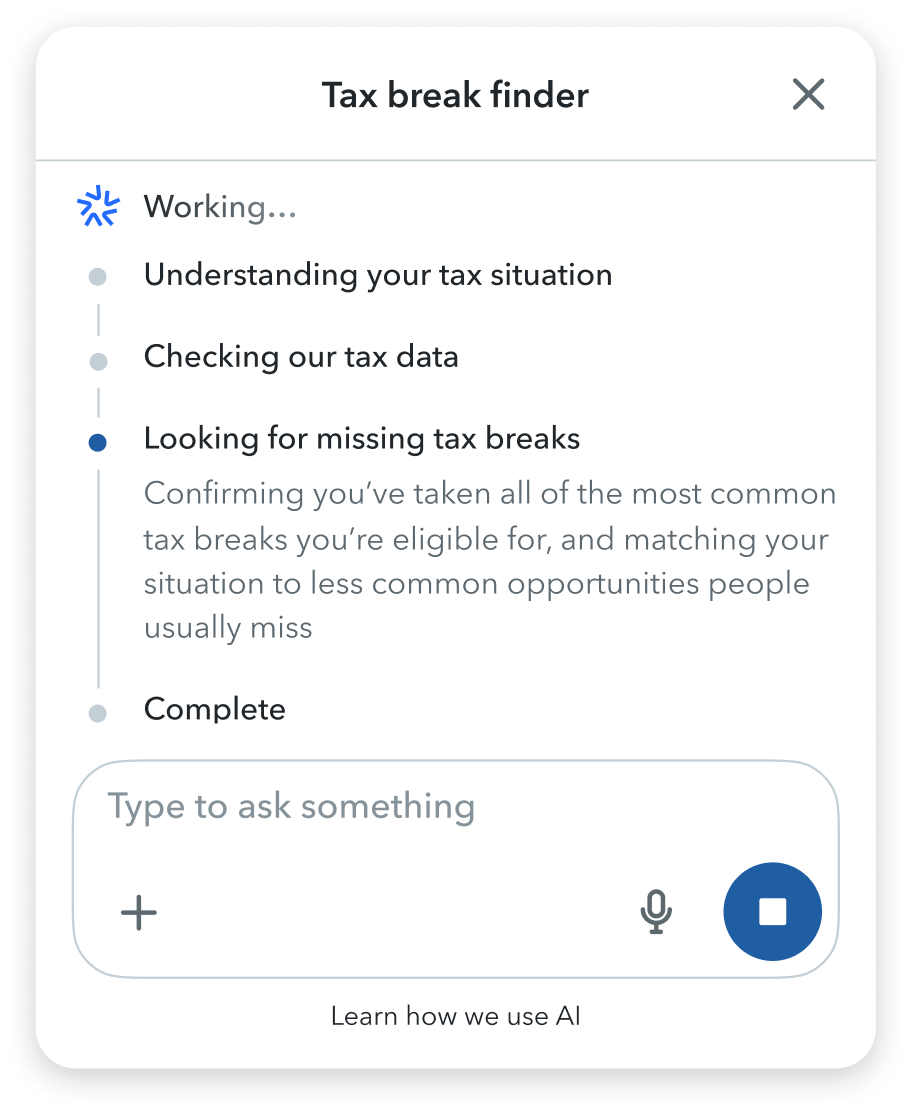
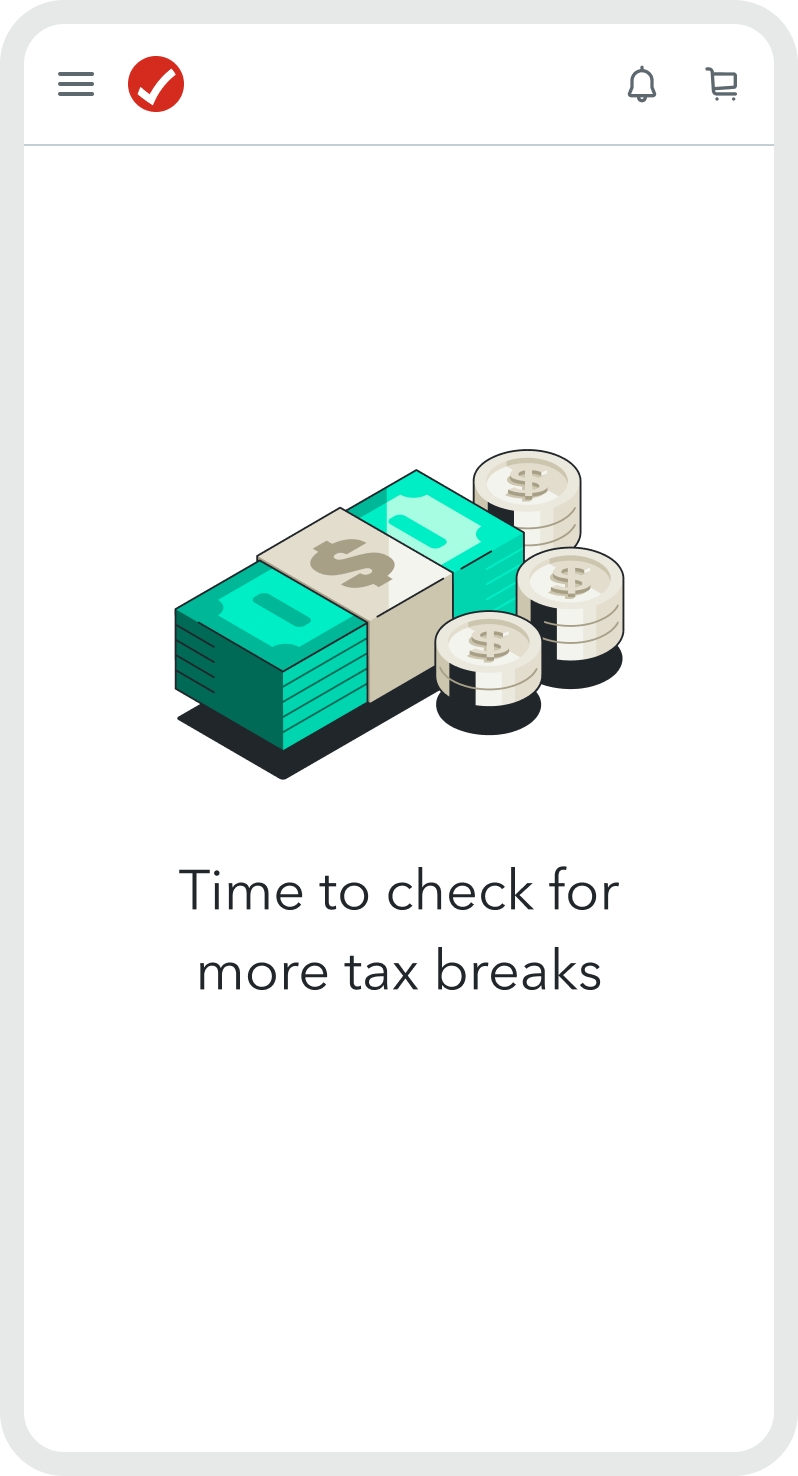
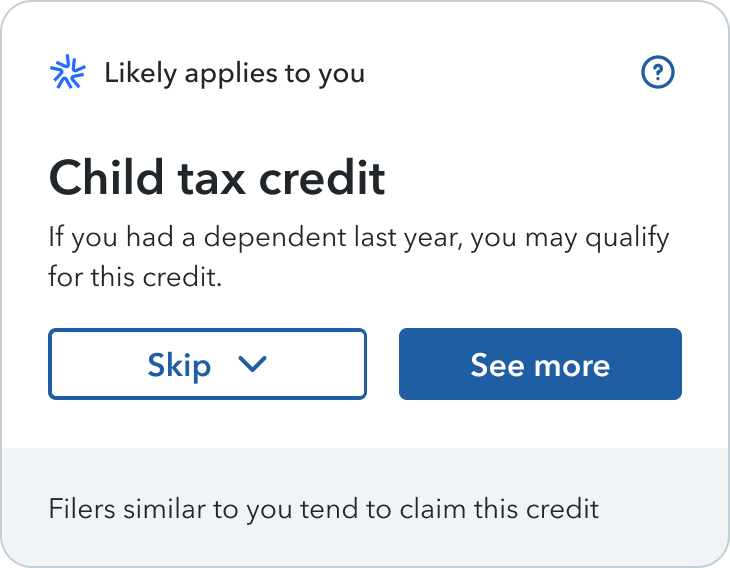
Customers were leaving money on the table. The product didn't know it.
Self-employed filers were coming into TurboTax uncertain, overwhelmed by documentation requirements, and anxious about missing deductions. They didn't know how to categorize income, found expense entry tedious, and feared an audit if they got something wrong. They needed a guide, not a form.
The data bore this out: customers who returned to amend their Schedule C increased their deductions by a median of $4.8K. The product was failing to surface what people were already entitled to.
TurboTax had AI features, but not an AI strategy.
In addition to the customer problem, we had a systematic issue. Across the product, customers encountered multiple help touchpoints: traditional self-help, human-assisted filing, and an emerging set of AI capabilities. But they weren't unified by a coherent vision. Each existed independently, without a shared model for how AI should behave, where it should live, or what role it should play in the customer journey.
As the broader industry coalesced around patterns like agentic copilots, proactive guidance, and ambient intelligence, TurboTax needed more than incremental improvements. It needed a platform-level point of view to quickly align efforts towards a unified goal.
Four problems. One consistent signal about trust.
Before designing anything, we ran a thorough audit of the existing AI experience and paired it with customer research to understand where things were actually breaking down. Four problems surfaced consistently. The help system was fragmented: customers encountered disconnected entry points with overlapping but distinct functionality, and often gave up and went to Google instead. Guidance wasn't context-aware: the product couldn't adapt to where someone was in their return or what situation they were in. Prep work was tedious: manual data entry and document hunting created friction that eroded momentum. And customers were uncertain about when to trust automation: they wanted AI to do more, but only if they could see its reasoning and stay in control.
The themes that emerged from the research were equally consistent: trust is earned through transparency, not just claimed through branding. Customers want AI to show its work. Personalization and context awareness are expected, not impressive. And automation is welcomed, but only when the customer feels like they're still driving.
Customers who came back to amend their return found $4.8K more in deductions. Money the product never helped them find the first time.
Push the boundaries first. Align the system second.
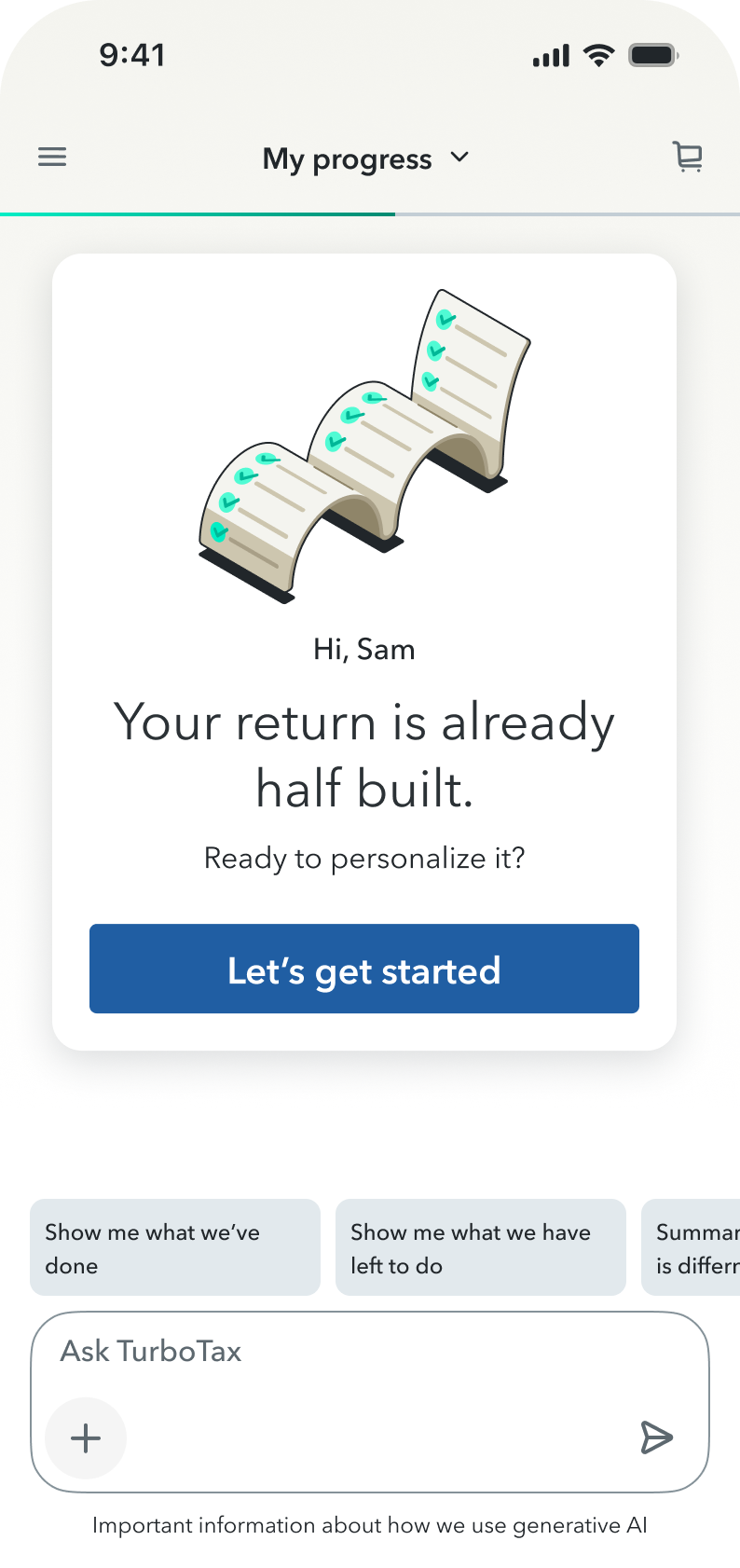
Before committing to an architectural direction, we ran a focused design sprint with a clear mandate: go bold. Rather than optimizing what existed, we wanted to explore how far the experience could go if we weren't constrained by the current system. We used AI-assisted design and prototyping tools to move quickly and build concepts at a fidelity that felt real enough to test with customers.
The concepts deliberately over-indexed on automation and proactive guidance. We wanted to learn where customers leaned in and where they pulled back, not from surveys, but from watching them interact with something that felt like a real product. The sessions were fast and generative. Customers were more willing to engage with bold AI experiences than we expected, and the moments where they hesitated told us exactly where the design needed to earn its confidence rather than assume it.
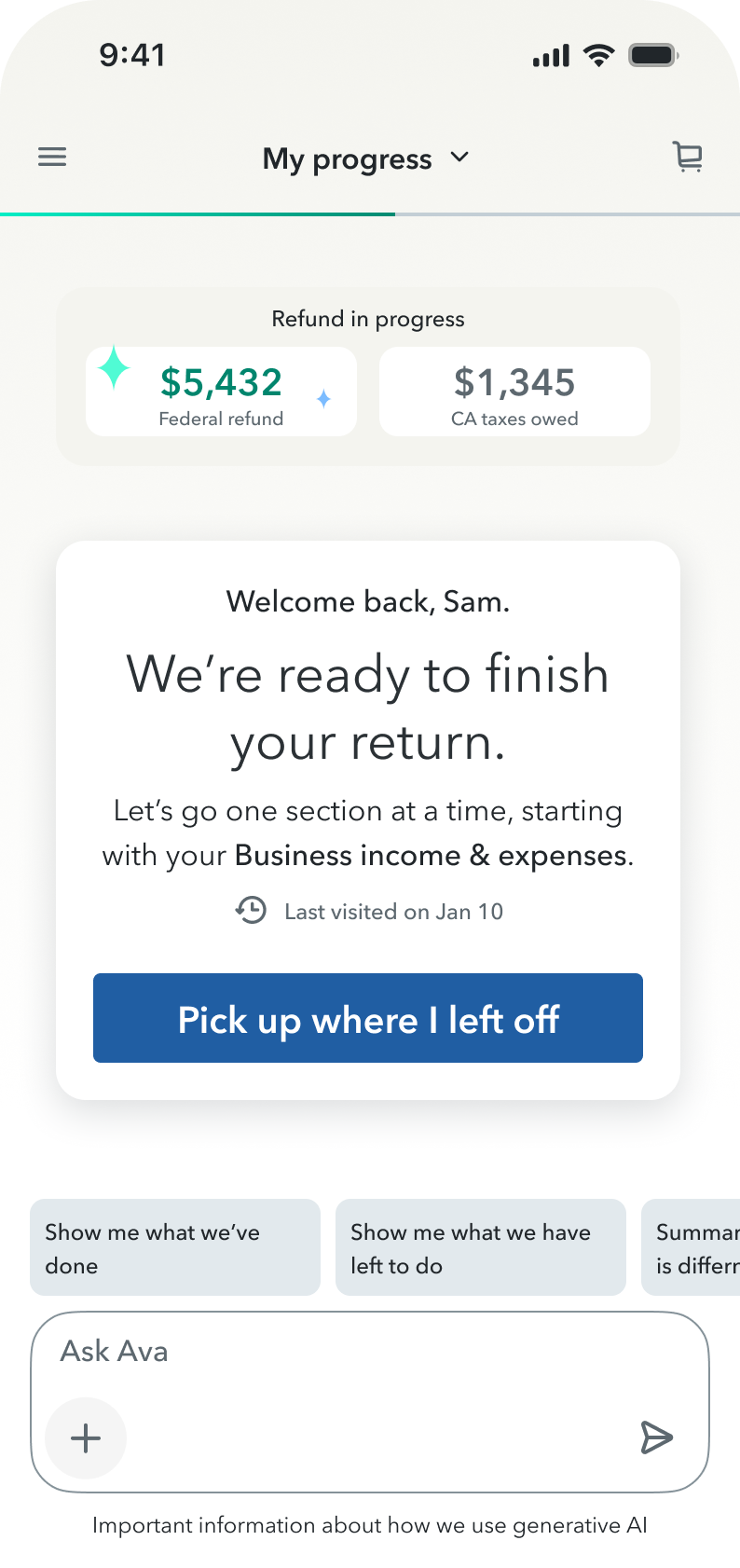
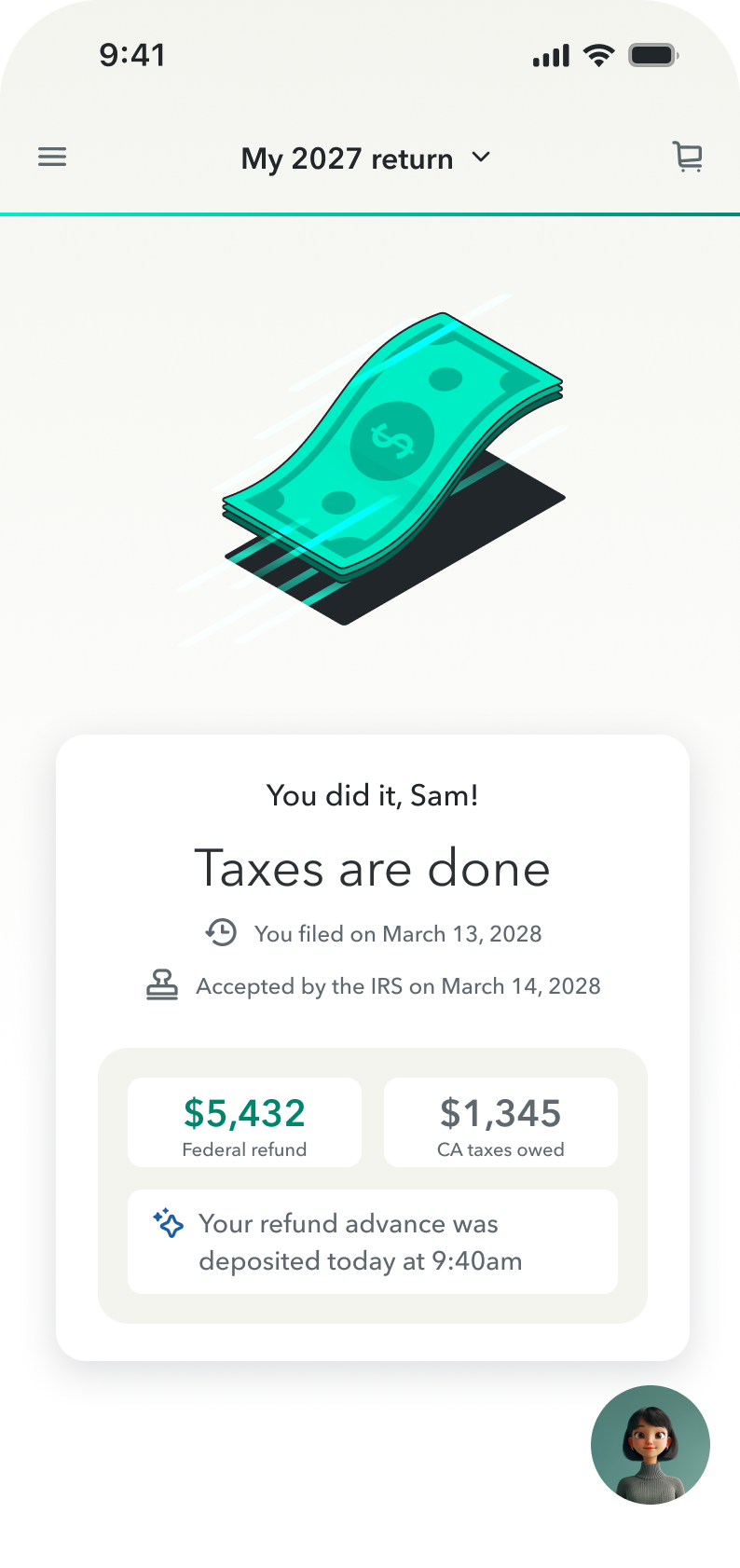
What customers taught us became the foundation for everything that followed.
The sprint sessions crystallized four principles that we applied to the unified system. Meet customers where they are: consistent placement, familiar patterns, and predictable behavior so they never have to learn the product twice. Show them you know them: use their data and context to personalize guidance without asking them to repeat themselves. Do the work for them: where manual effort can be automated, automate it; where smart suggestions can replace manual entry, make them. And build complete confidence: denote what AI has done, explain how, and give customers visibility into the process so trust is earned, not assumed.
These weren't just design tenets. They became the shared language across product, engineering, and design for every decision that followed.
Setting the direction, then building the conditions to execute it.
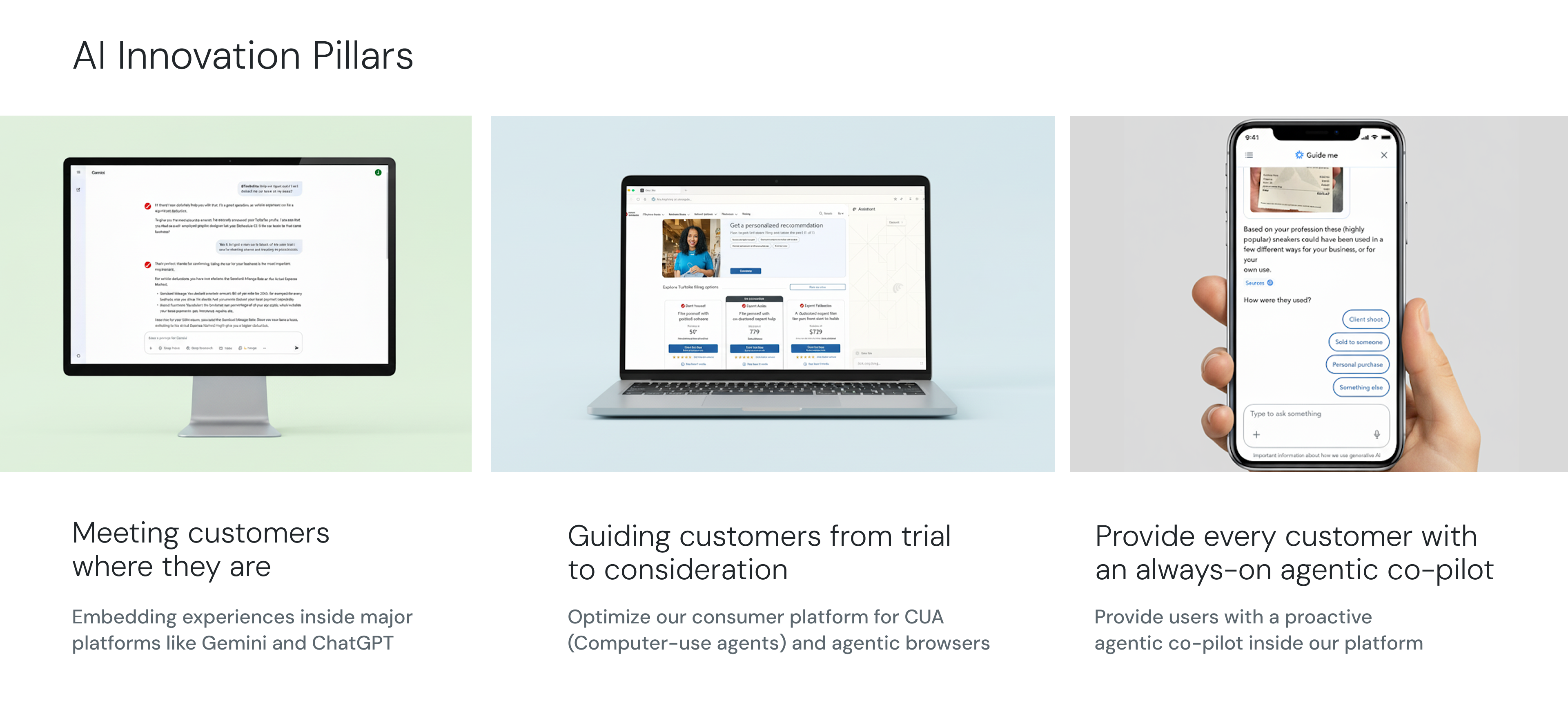
With that foundation in place, I partnered with product and engineering leadership to define three strategic pillars that would frame how TurboTax approached AI: meeting customers where they are, guiding them through consideration, and providing an always-on agentic co-pilot. These became the shared language across a cross-functional team of 12 that aligned design, product, and engineering around a common north star.
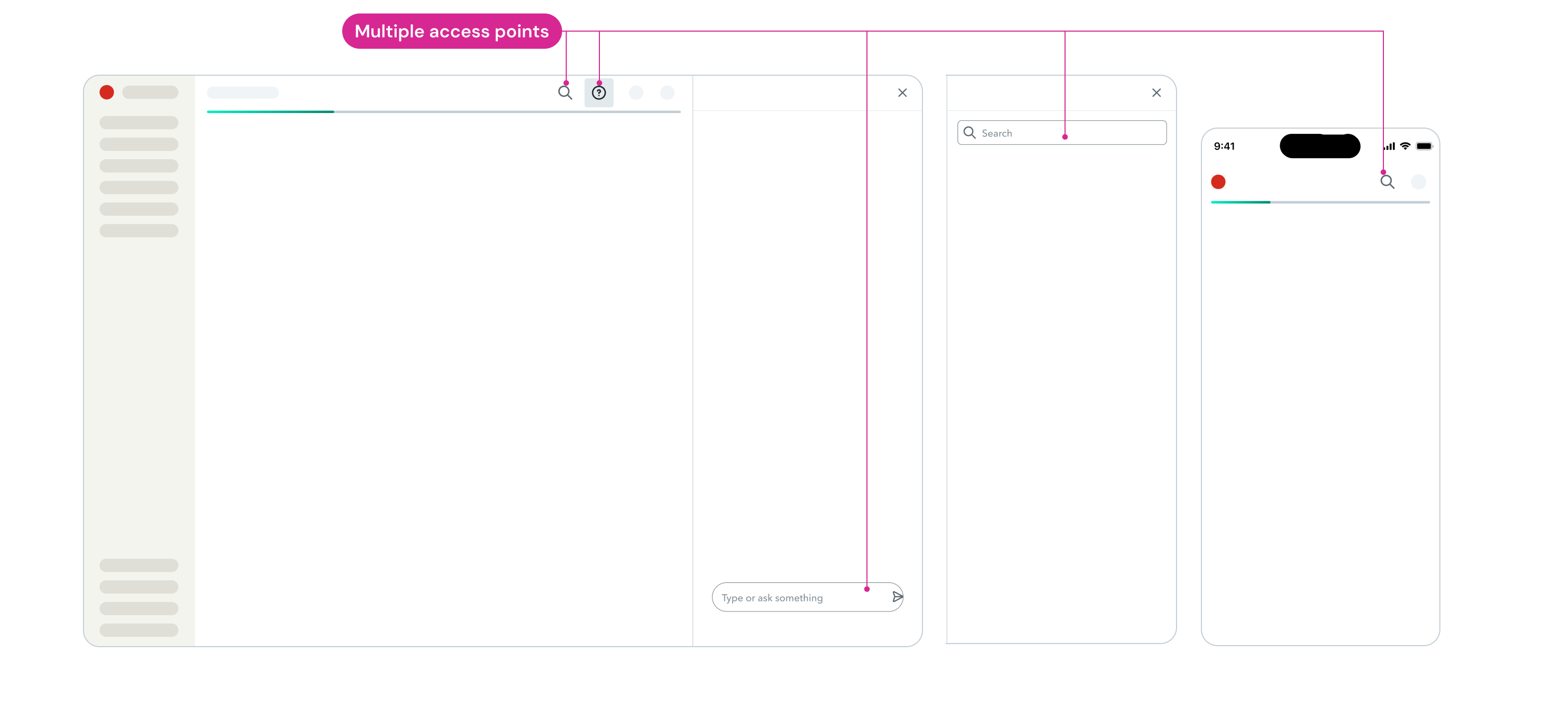
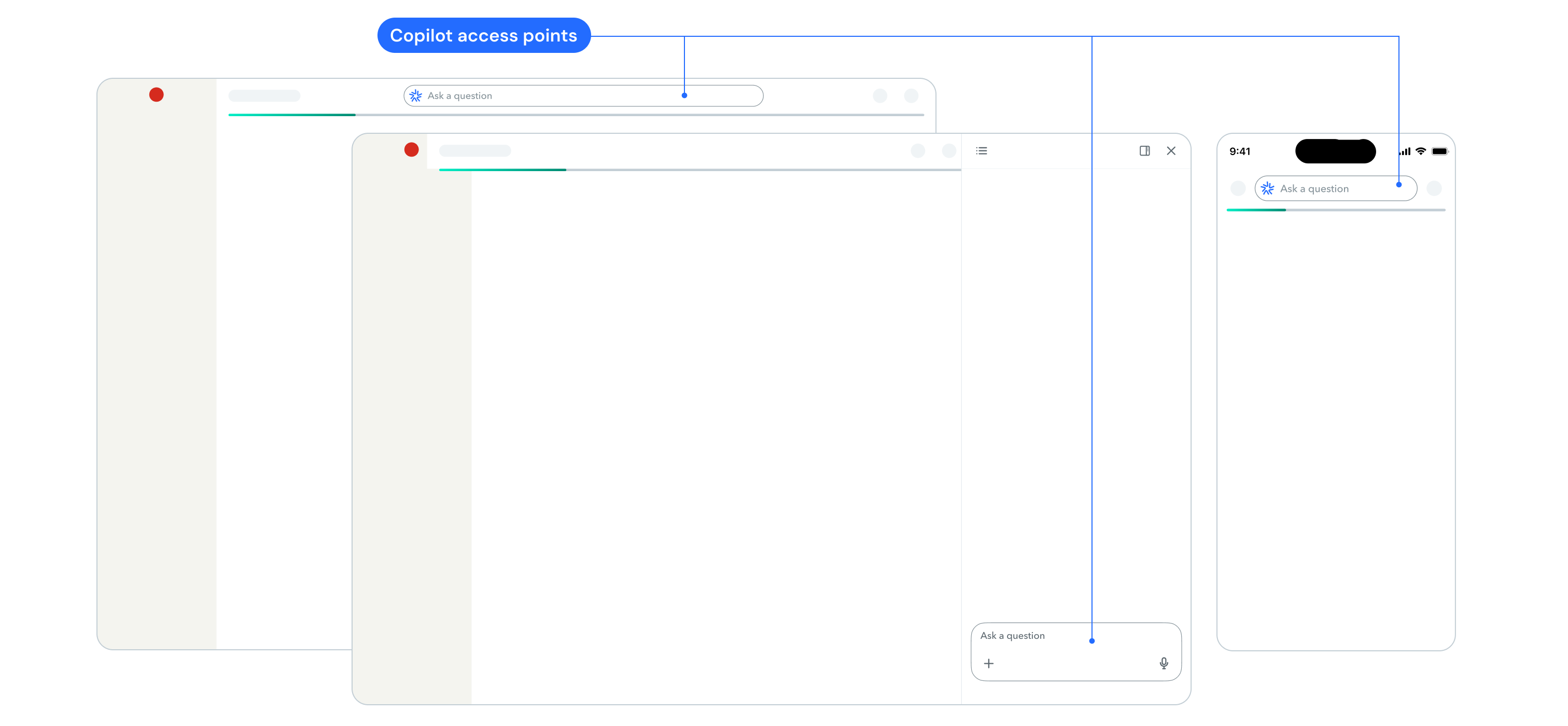
Running in parallel, I led a cross-team effort to unify the AI access points across TurboTax. Where the product had historically had scattered, disconnected entry points into help and AI, we defined a cohesive system that made the experience feel intentional and coherent for customers.
With the vision in place, we presented to senior leadership including VPs, SVPs, and the GM, and ultimately to the CEO. When he aligned, it became a company priority and gave the team the mandate to execute at scale.
One front door, instead of many.
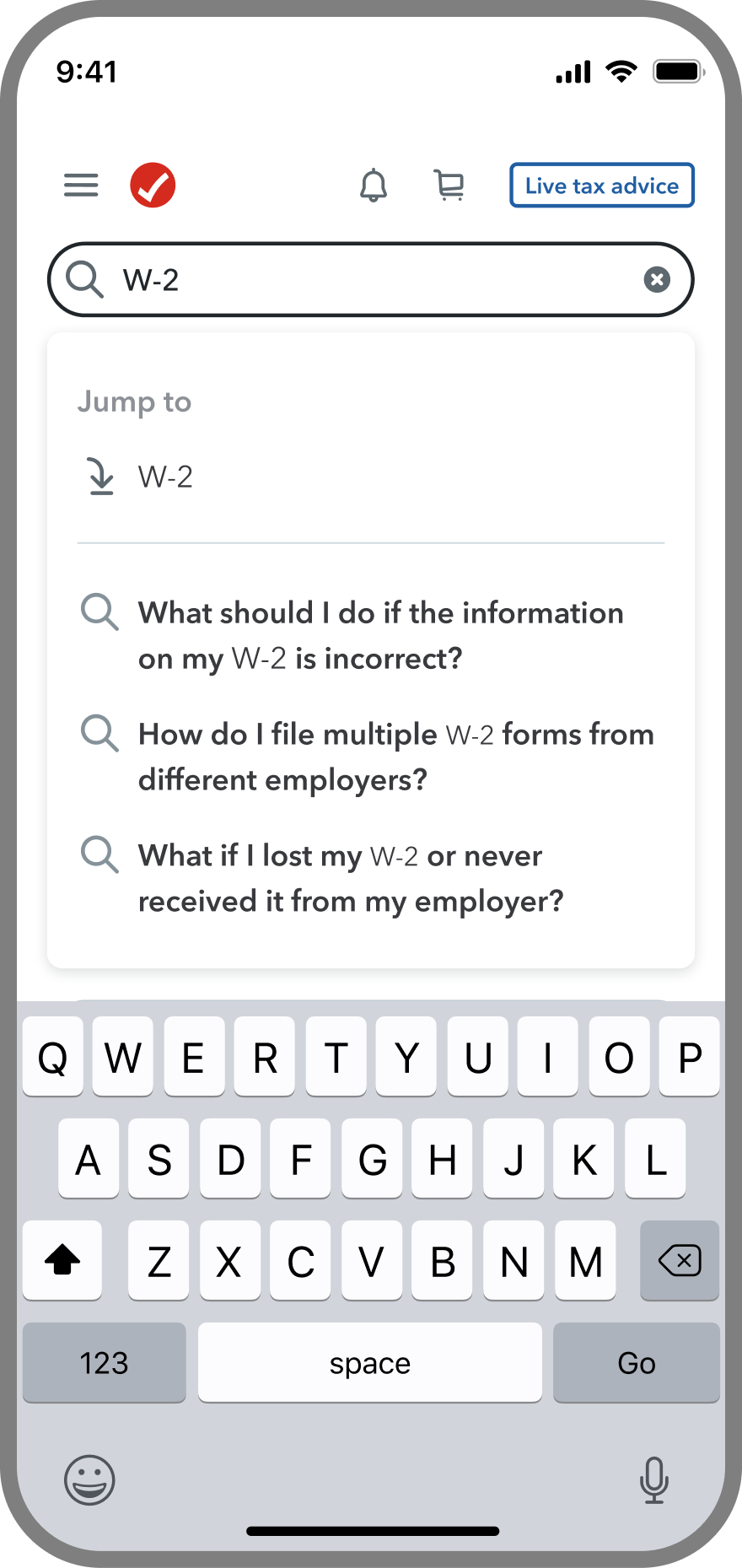
TurboTax had multiple icon-based entry points into different help systems, each with slightly different functionality, each creating confusion. Customers missed them entirely or didn't understand the distinction. The goal was to collapse these into a single, cohesive experience that unified help and search.
Getting there took nearly a year. Exposing search early surfaced AI quality issues that only became visible at scale. Traffic we hadn't anticipated stress-tested the experience in ways prototypes couldn't, and we had to balance design and engineering time between improving the experience and ensuring contacts didn't spike and conversion didn't dip.
Throughout, we tested different entry point treatments: classic search icons, AI icons, helper text. We watched customers' mental models shift in real time. Even in tax, a category where trust moves slowly, customers became more open to AI faster than we expected. By the end, the product reflected where customers actually were, not where we assumed they'd be.
From a chatbot bolted on the side, to a co-pilot woven into the experience.
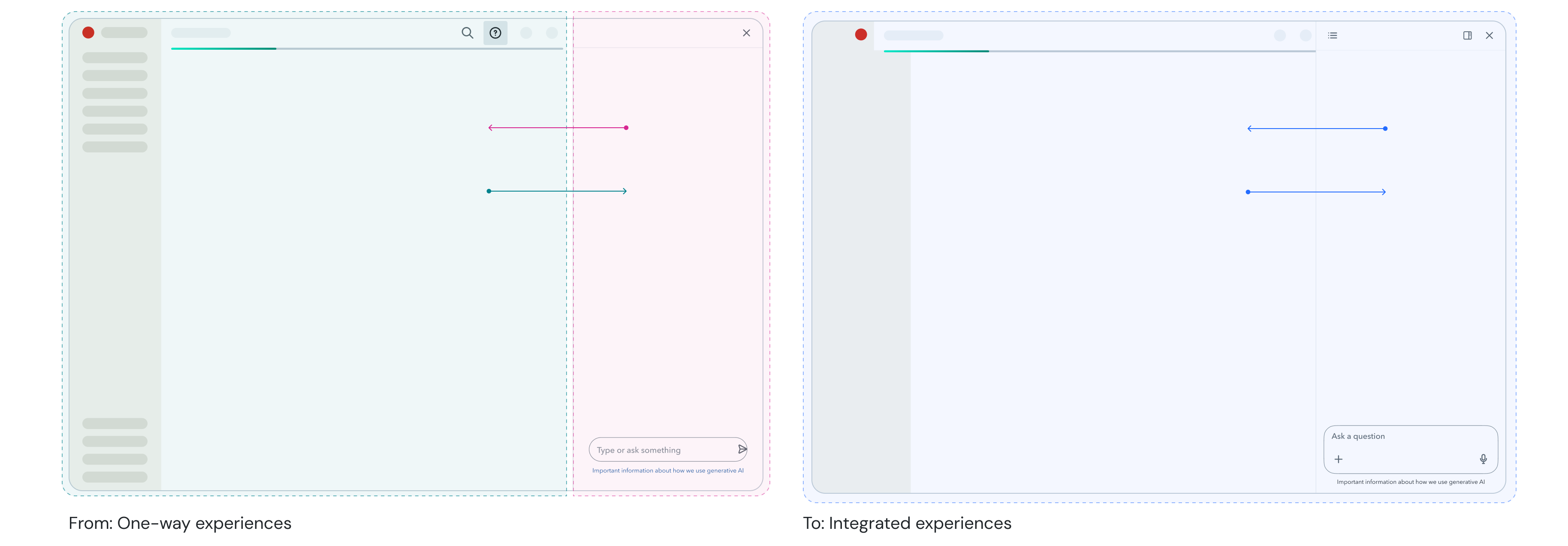
The existing Intuit Assist feature was a right-hand panel Q&A experience, useful in isolation but blind to everything else. It had no awareness of where the customer was in their return, no access to their tax data, and no connection to other agentic capabilities elsewhere in the product. Each AI surface operated independently, and the result felt fragmented and tacked on.
The work required more than improving a feature. It required inventing a new design system for multi-modal AI interactions during tax prep. We needed a coherent set of cues and form factors that could support both user-directed and agentic modes, let the co-pilot act on the customer's behalf, and keep the core experience as the system of record, all without eroding the trust that tax software depends on.
We grounded the work in a clear set of design tenets: the customer is always in control, the co-pilot has full context awareness of their return and journey, any action it takes is reflected in the core experience, and autonomy is layered in gradually. We studied emerging patterns from tools like Perplexity, Amazon Rufus, and Cursor to understand where AI-native design was heading, and pressure-tested our explorations against what made TurboTax's position uniquely defensible.
The result was a suite of task-specific agents covering deductions and credits, self-employed expenses, income qualification, and more, built on a shared foundation that could also power virtual experts in the Assisted product. The vision that emerged became the aligned target experience across design, product, engineering, and ultimately the CEO.
Customers who came back to amend their return found $4.8K more in deductions. Money the product never helped them find the first time.
From a co-pilot that answers questions to one that gets things done.
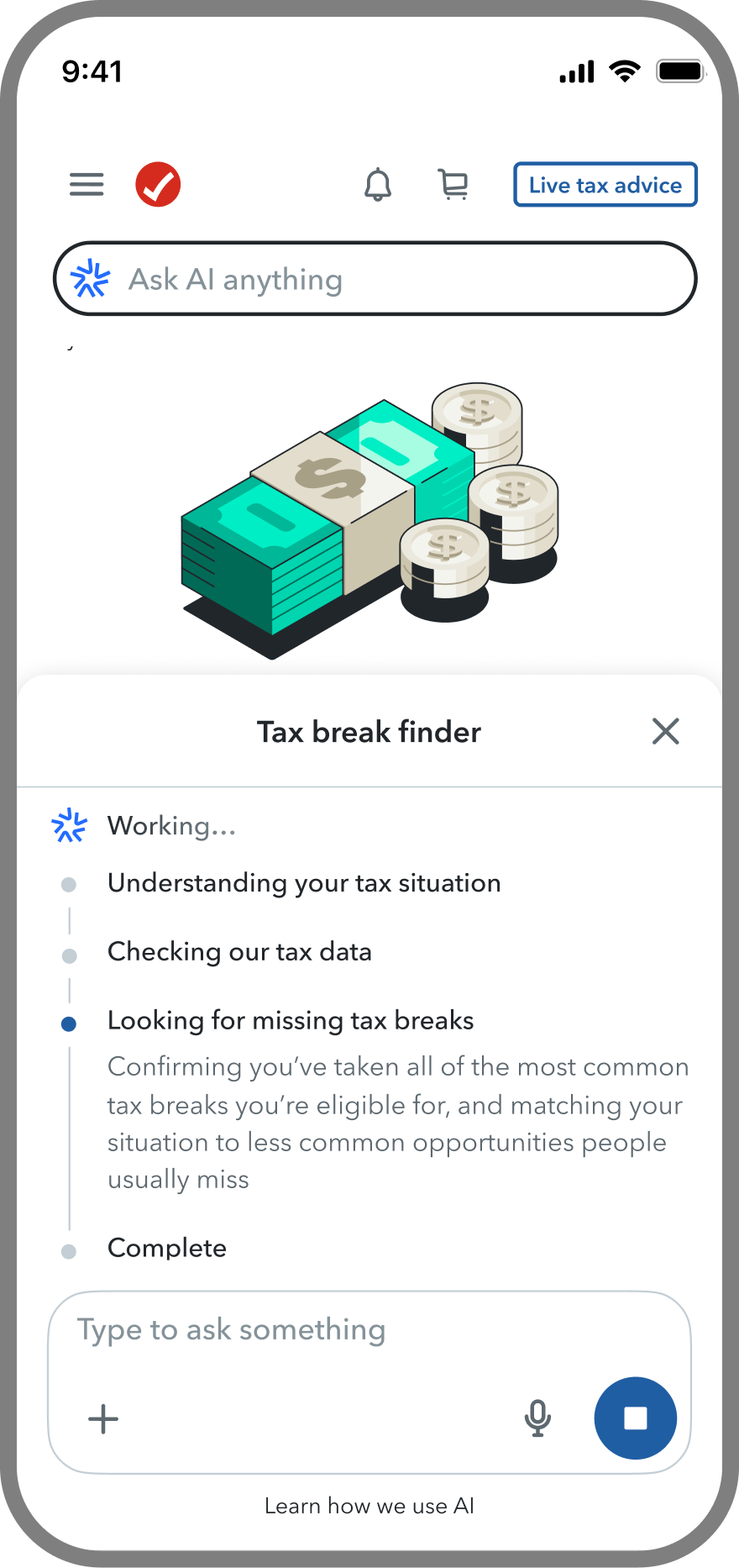
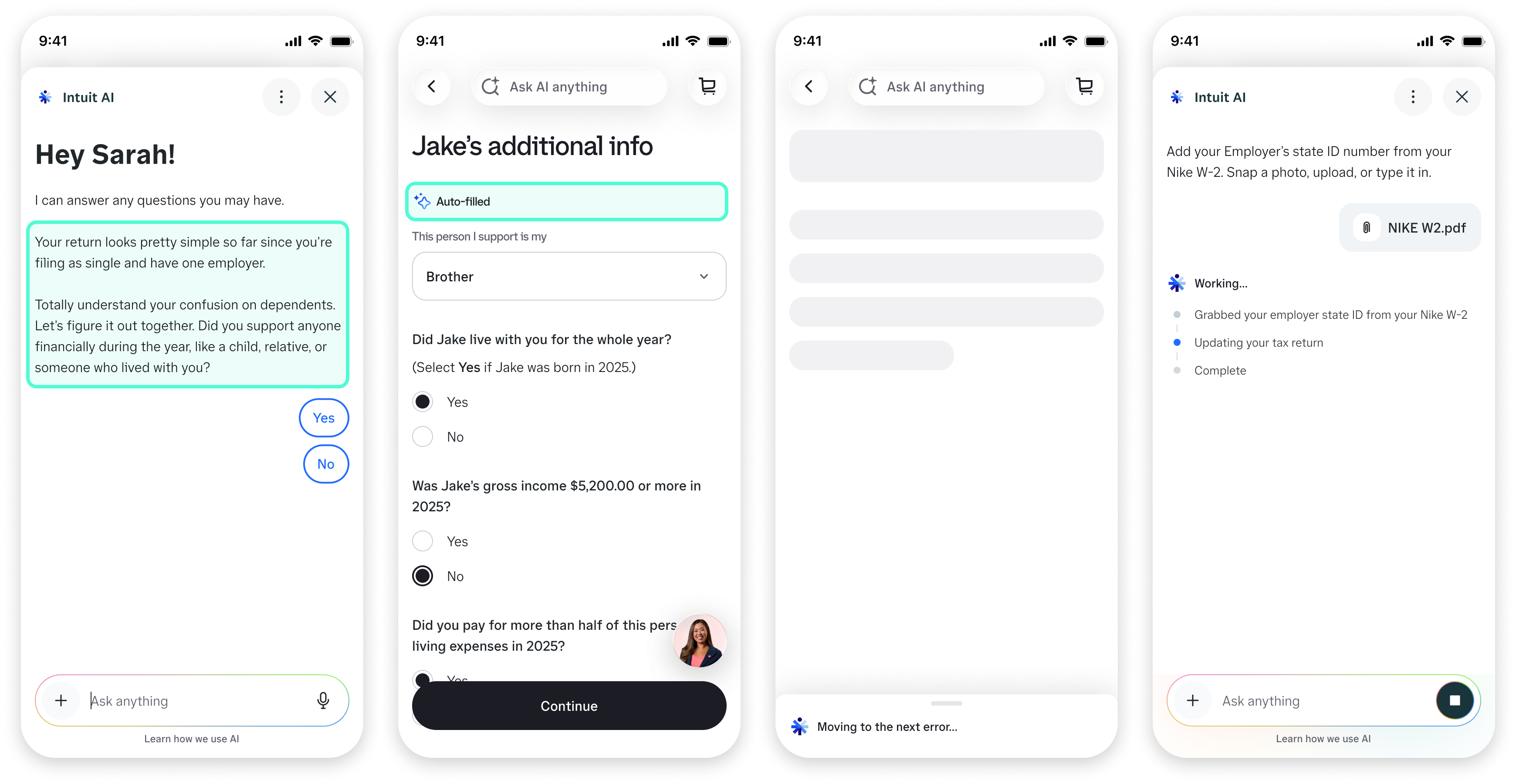
The next evolution of the platform is a persistent orchestration layer: always present, always aware of what's on screen, and capable of translating whatever the customer is looking at into plain language they can actually act on. Rather than requiring customers to know what to ask, the agent surfaces what's relevant in the moment.
From there, action replaces instruction. With the customer's permission, the agent fills in fields, makes selections, and completes the tedious work that tax prep has always required. Navigation becomes invisible too: rather than hunting through menus or clicking back through screens, the agent moves the customer where they need to go.
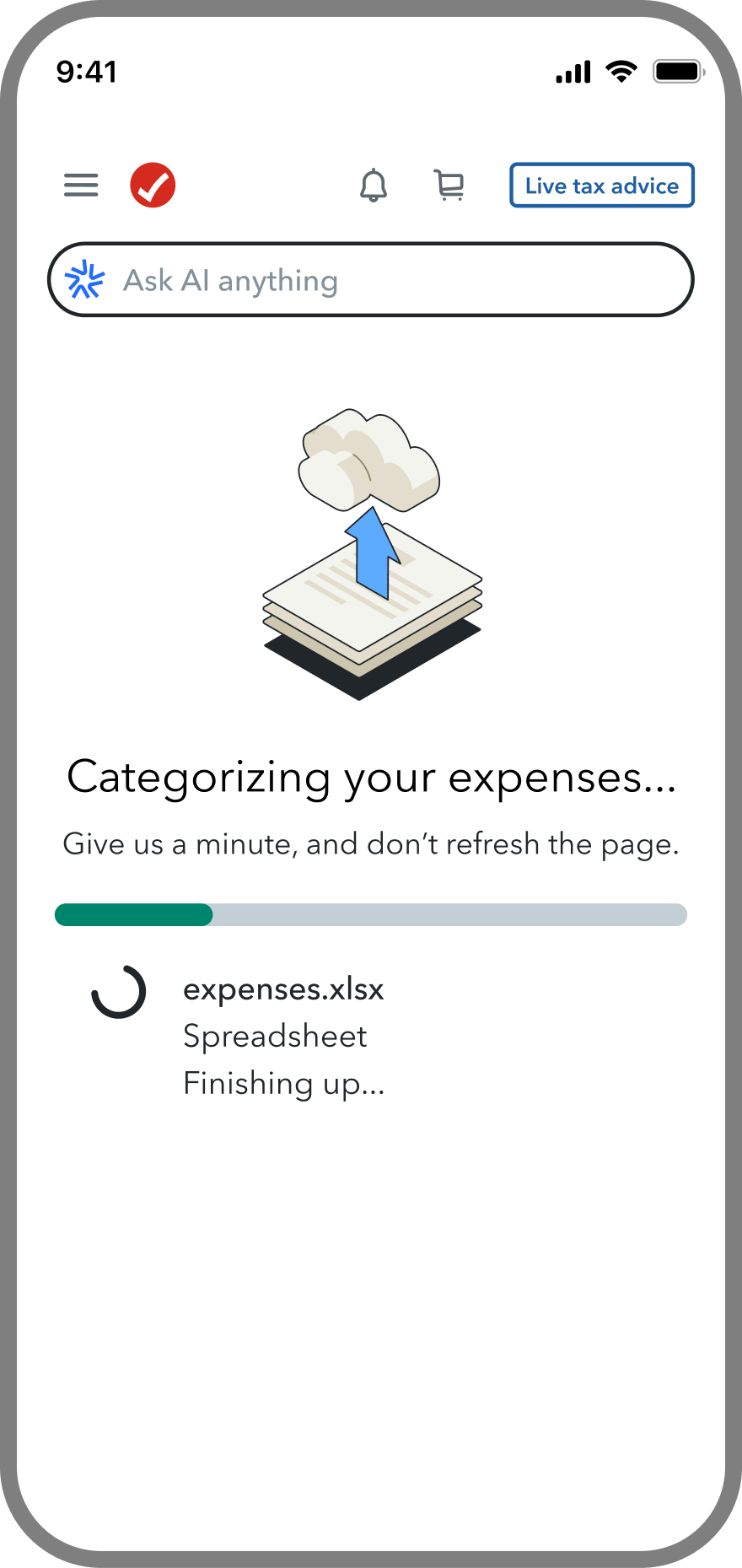
Data-in becomes a first-class capability at every touchpoint. Customers can hand the agent a document, a screenshot, a photo of a form, or a link to external content, and it makes sense of it: extracting what matters, resolving ambiguity, and laying out a clear path forward. The goal is an experience where nothing requires hunting, nothing requires repeating yourself, and the product meets customers with exactly what they need, in the moment they need it.
The outcome